
CALLUM INNES
1962, Edinburgh, Scotland
Callum Innes is one of the most important abstract painters of his generation. Born in Edinburgh in 1962, he has developed a pictorial practice based on the relationship between building up and erasing the image. His works are in fact born from a distinctive process: colour is applied to the canvas and then removed with turpentine, allowing glazes, traces and unexpected depths to emerge. This balance between presence and absence gives his painting an extremely quiet, meditative and recognisable quality. Exhibited in major international museums, from the Guggenheim in New York to Tate in London, Innes continues to live and work in Scotland.
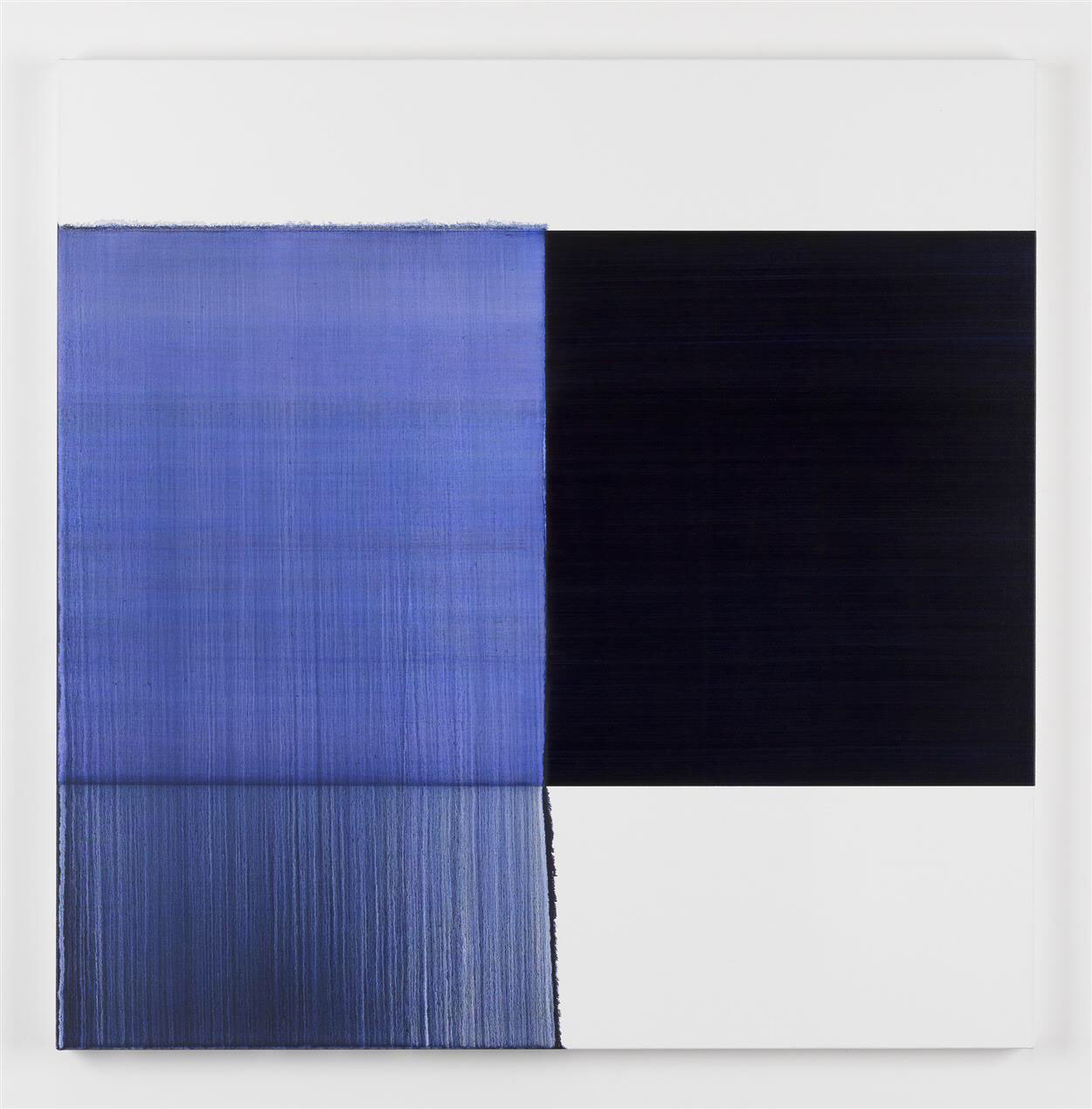
CALLUM INNES
EXPOSED PAINTING BLUE VIOLET, 2016
Oil on linen, 120x119 cm.
The first thing that strikes you about this work is that it looks simple. Two large fields of colour, a clean, almost geometric division. But stand in front of it for a few minutes and you start to see something else: traces of the colour that was removed, layers, that vertical line breaking the surface's otherwise perfect balance.
Callum Innes doesn't paint only by adding colour. He also paints by taking it away. He erases, washes away, starts over several times on the same canvas. And you can see it. The work never feels cold or overly calculated: it holds time within it, doubt, and attempts.
This is exactly what makes these works so compelling for a collector. They don't try to impress with images or effects. They work slowly. The more you look at them, the more your relationship with them changes. And in the end you realise that this seemingly minimal surface is far more physical and alive than it first appeared.
Learn more
Visit the artist’s website
(External link)