
Enzo Cacciola
1945, Arenzano, Italy
Enzo Cacciola is one of the leading figures of Italian Analytical Painting. From the 1970s onwards, he gradually moved away from traditional painting to focus on the relationship between matter, surface and time.
Cement, asbestos, industrial adhesives and pigments became central materials in his research. His works do not represent images, but processes: matter transforms, reacts, dries, cracks and independently constructs the surface of the work.
He participated in documenta 6 in Kassel in 1977 and has been included in major exhibitions devoted to Italian Analytical and aniconic painting.
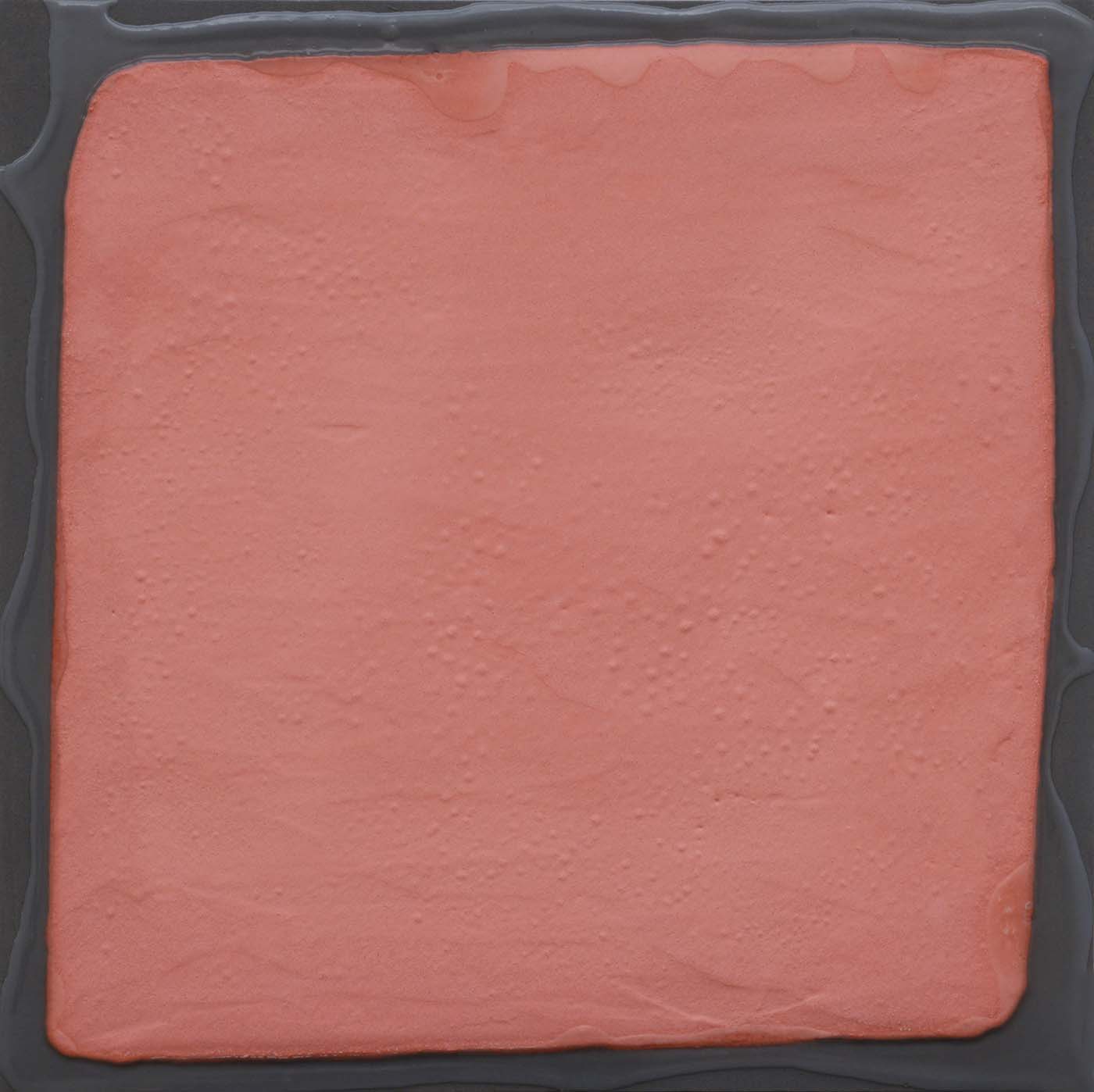
Enzo Cacciola
10/11/1974, 1974
Cement and asbestos on canvas
60 x 60 cm
Looking at this work, it immediately becomes clear that Enzo Cacciola is not interested in displaying painterly skill. On the contrary, he appears almost to remove himself from the process.
The cement spreads, settles and contracts, generating its own tensions and subtle transformations. The work emerges more from time than from gesture. It is as though the artist sets the conditions and then allows the material itself to determine what it will become.
This may be precisely what gives the work its power. Within an apparently simple surface, something remains alive: the weight of the material, the time required for it to dry, the waiting and even the possibility of error.
Knowing that these works emerged in the years following 1968 changes the way they are perceived. Cement was not chosen solely for aesthetic reasons. It is a working material, tangible and far removed from traditional painting. Cacciola brings into art something that belongs to construction sites, walls and the changing city.
Ultimately, this work is not about representation. It is about transformation. The longer it is observed, the more it appears to be the result of a natural process halted only moments before it might begin to change again.